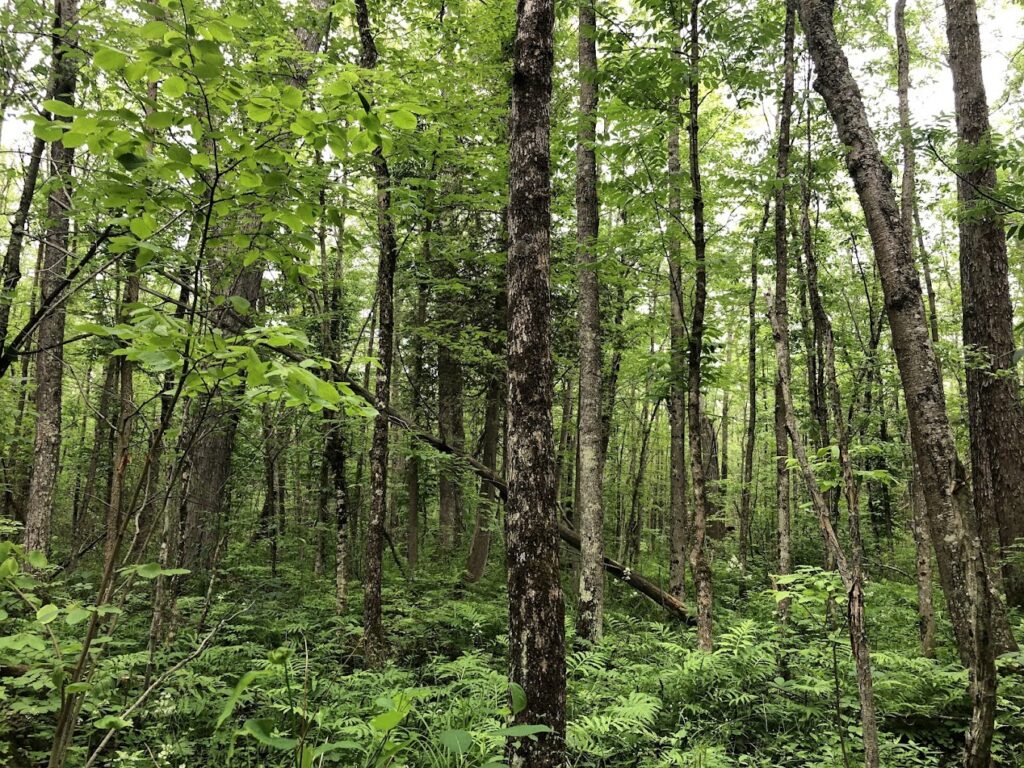
Black ash (Fraxinus nigra) is a wetland species, often located in swamp ecosystems in eastern North America. Black ash is listed as Endangered in Ontario as part of the Protected Species in Ontario List under the Species Conservation Act (SCA), in areas that have been severely impacted by the Emerald Ash Borer (EAB). The invasive EAB is the main threat to ash species. Forest Gene Conservation Association (FGCA) has been w orking on recovering black ash with the help of our many partners.
Do you have a healthy black ash? We want to know!
Black ash recovery involves many different activities and organizations. Forest Gene Conservation Association (FGCA) is conducting a number of projects that contribute to black ash recovery that include:
1. Lingering black ash searches
The FGCA is searching for and tracking healthy black ash individuals that may be showing signs of Emerald Ash Borer (EAB) resistance in Ontario, otherwise known as lingering and remnant black ash. Our goal is to establish living archives that hold the genetics of the remaining healthy black ash on the landscape.
The term lingering ash describes a healthy ash tree of >10 cm dbh existing in a site that is known to have been infested for several years and where >95 percent of trees have already died (Knight et al 2014).
2. Archiving
Archiving begins with gathering material from individuals showing putative tolerance or resistance to the Emerald Ash Borer (EAB), producing resilient progeny with the purpose of reintroducing them back onto the landscape in black ash’s ecological niche. Activities involved in this process include:
- Scion collection
- Grafting and other propagation methods
- Seed orchard establishment and management
3. Seed collection and banking
We are working with partners like the Ontario Ministry of Natural Resources (MNR), the Canadian Forest Service’s National Tree Seed Center (NTSC) and the Invasive Species Center (ISC) to bank conservation collections from surviving black ash on the landscape.
4. Black ash habitat assessment
FGCA is working with partners to conduct ongoing habitat studies to understand what makes suitable black ash habitat. This is important to inform decision making for critical habitat, re-introduction activities and black ash recovery as a whole. These assessments consider vegetation sampling activities such as botanical surveys, soil sampling and understanding features such as: topography, aspect, and geographic location.
5. Indigenous engagement
Black ash holds significant cultural value to Indigenous Peoples in Canada; we have been working with several First Nation communities and welcome collaboration with additional communities that are interested in working together towards black ash recovery.
6. Outreach
FGCA has many different avenues to engage with partners and the public about our recovery programs. Some of these activities include:
Black ash recovery involves many different activities and organizations. Forest Gene Conservation Association (FGCA) is conducting a number of projects that contribute to black ash recovery that include:
- Social media platforms
- Conference attendance
- Presentations at events
- New articles
- Radio interviews
- Podcasts
We want to hear from you!
Do you have a healthy Black Ash?
In our black ash recovery program we are looking for healthy mature black ash to include in our archives. We are looking for healthy black ash in areas where EAB has caused significant mortality. If you are interested in contributing to black ash recovery and you have a tree that fits this description, we would love to hear from you.
Please see our Black Ash Handout PDF here!