
Propagation Methods Supporting Recovery
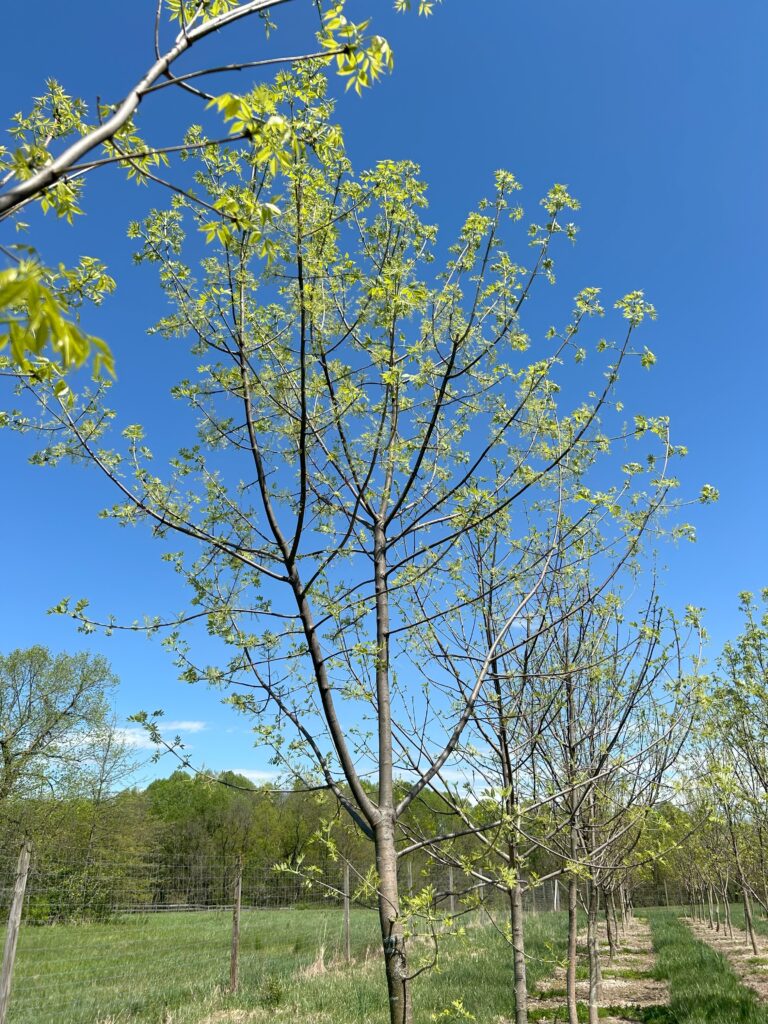
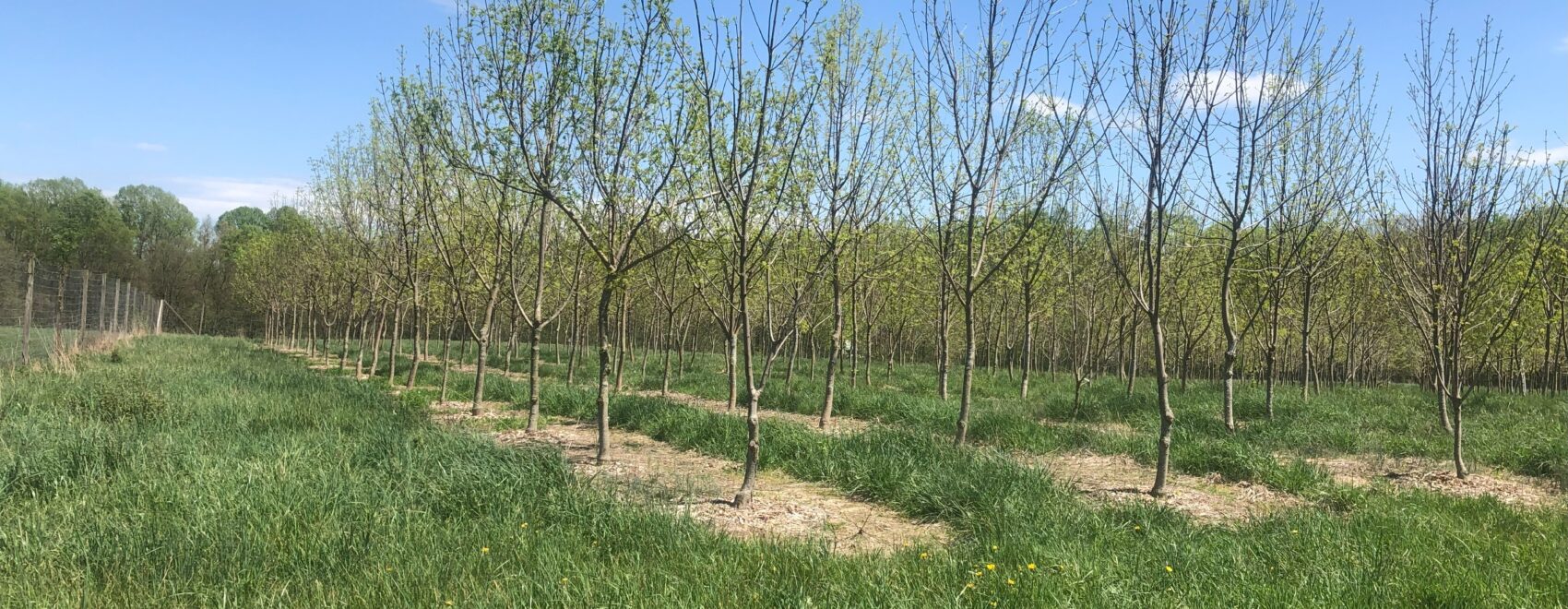
Photo taken in May 2024 by Nina Hunt at an ash orchard in Holden Arboretum
The launch of our Black Ash Recovery Program has led us to delve into which propagation methods may be best for the conservation and reintroduction of this Endangered species in Ontario (Endangered Species Act, 2007). The FGCA is embarking on some trials in collaboration with partners, and each method plays a different and important role in black ash conservation.
Germinating Wild Collected Seed
Propagation of seedlings from wild seed maintains the genetic biodiversity of black ash from the landscape. The FGCA is working with the Ontario Forest Research Institute (OFRI) to investigate best practices for propagation of wild seed collected from ecodistricts across black ash’s range in Ontario.
A conservation tool that goes hand-in-hand with propagation of black ash seed is seed banking – and here we are not talking about the bank of seeds that exist within the muck of black ash swamps! A seed bank facility is a type of genebank that stores seed to preserve genetic diversity for the future. For over a decade the FGCA has been working with the National Tree Seed Centre (NTSC) to bank seed of all native ash in Ontario, including black ash. This seed acts to preserve genetic diversity that may be lost due to Emerald Ash Borer (EAB), and could be used for future reintroduction or conservation efforts.
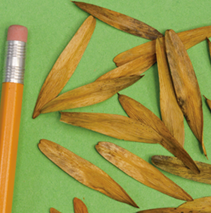
Photo of black ash seed taken by Melissa Spearing and published in Seeds of Ontario & Eastern Canada: A Manual for Tree and Shrub Forecasting and Collection 2nd ed. (FGCA, 2023)
Vegetative Propagation
While propagation from seed is important for genetically diverse seedlings, vegetative propagation also plays a key role in the FGCA’s recovery program. Specifically, we have been working with the United States Forest Service and the Holden Arboretum through the Great Lakes Basin Forest Health Collaborative to learn new techniques of vegetative propagation that are used for breeding of pest-resistant trees.
Tree grafting, a commonly used technique for fruit tree production, is a horticultural technique that involves joining tissues of plants so that they can continue to grow together. Our team is well-equipped to experiment with new species and grafting techniques through our well-established butternut grafting program. By collecting twig cuttings, or “scions”, from healthy black ash in the wild, we can produce genetically identical replicas for conservation of the species off-site.
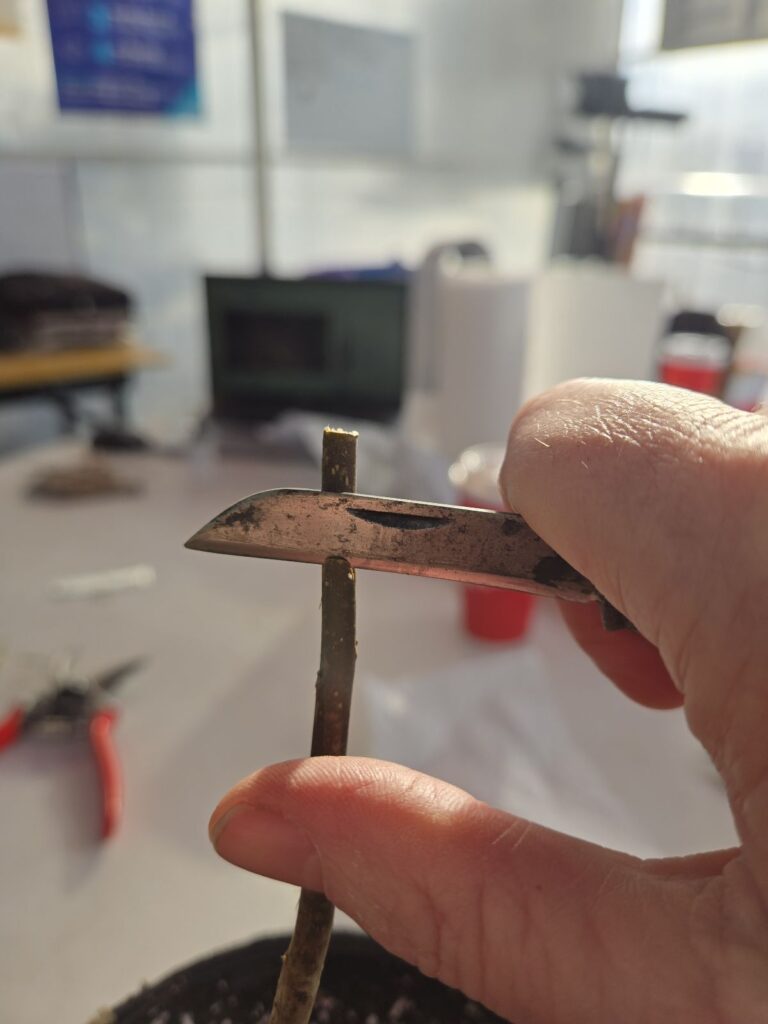
Photo of black ash grafting taken by Adam Youngblut at the FGCA’s nursery facility
As an alternative to grafting, cuttings can be induced to produce roots when placed in appropriate growing conditions. Our team has assembled specialized chambers to test this method of propagation with black ash. Similar to grafting, rooted cuttings can provide a method of propagation used for conservation of black ash off site – otherwise known as “ex-situ conservation”.
Genetic Archives and Seed Orchards
One goal for the FGCA’s recovery program is to produce genetic archives or seed orchards for black ash. These plantings will preserve the genetics of black ash from across the landscape, and can be used to produce seed for future reintroduction. The long-term goal for our vegetatively propagated seedlings is to plant orchards that produce seed with proven resistance to EAB. At this time, resistance to EAB by black ash is still being investigated, though pest-resistance holds promise for the future of ash forests and has been demonstrated in other species of ash native to Ontario like Green Ash (Fraxinus pennsylvanica; Stanley et al 2023; Kelly et al 2020).
It is clear how each of these methods provides different values to a recovery program, and we hope to publish our results in a best practices for black ash propagation document in the coming year. We are excited to continue sharing our groundbreaking work towards resilience in the forests of Ontario!
References
Stanley, R., Carey, D., Mason, M., Aletta, D., Wolf, J., Otoo, K., Polan, T., Koch, J., Jones, D., and Romero-Severson, J. 2023. Emerald ash borer (Agrilus planpennis) infestation bioassays and metabolic profiles of green ash (Fraxinus pennsylvanica) provide evidence for an induced host defensive response to larval infestation. Frontiers in Forest and Global Change. 6:1166421.
Kelly, L., Plumb, W., Carey, D., Mason E., Cooper, E., Crowther, W., Whittemore, A., Rossiter, S., Koch, J., and Buggs, R. 2020. Convergent molecular evolution among ash species resistant to the emerald ash borer. Nature Ecology & Evolution. 4:1116-1128.
Leave a Reply
You must be logged in to post a comment.