

FGCA’s Ongoing Efforts in Butternut Recovery
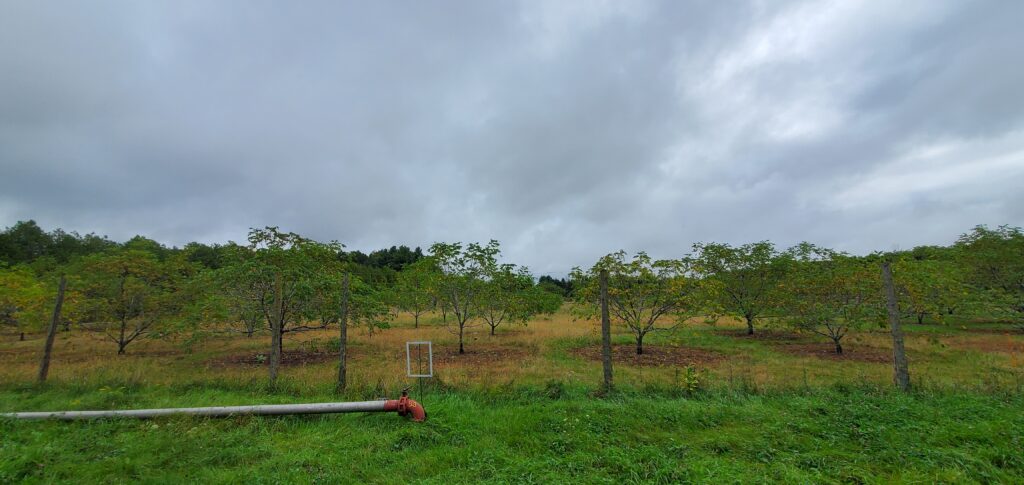
At the Forest Gene Conservation Association (FGCA), our overarching goal for Butternut recovery is to help ensure this endangered species’ continued presence in Ontario’s forests. We’re working to conserve and restore the tree’s genetic diversity, helping to preserve its potential for genetic tolerance to Butternut Canker—a devastating fungal disease threatening the species across its range.
Since 2008, FGCA has been cloning Butternut through grafting: dormant, late-winter scions are joined with actively flushing Black Walnut seedling rootstock. After two years of careful maintenance in pots, these grafts are distributed and planted across multiple five-acre sites throughout Ontario. Each site serves as a long-term genetic archive—a living reserve preserving material from trees identified as potentially tolerant to Butternut Canker.
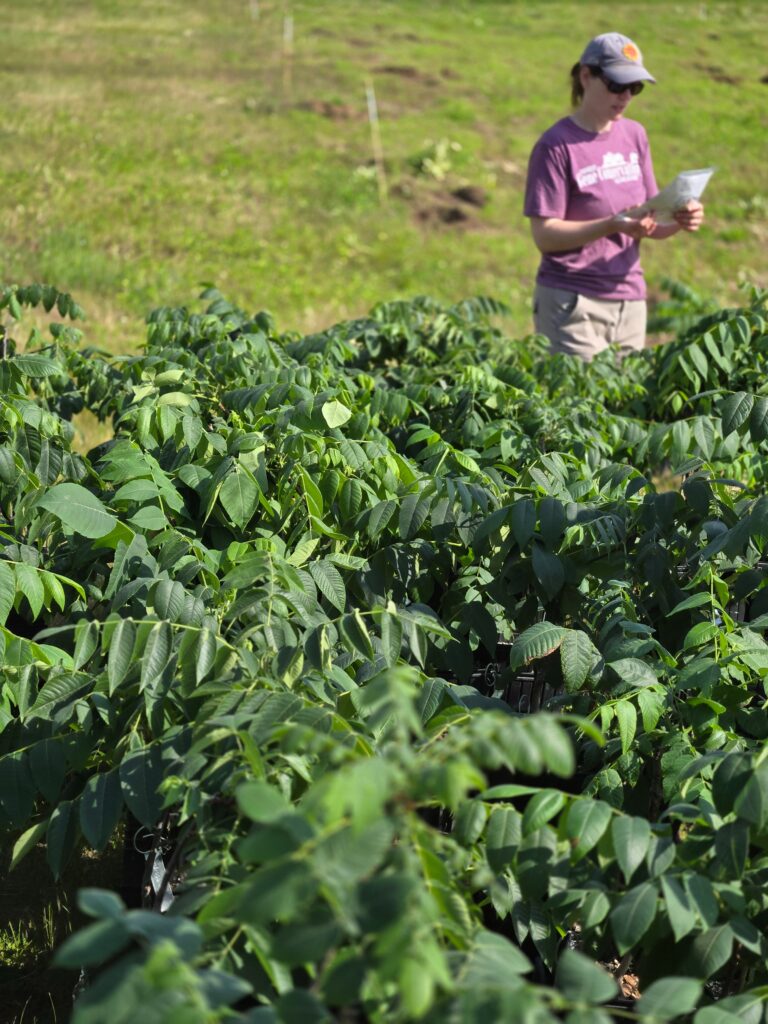
Maintaining these seed orchards is no small task. They require ongoing care, monitoring, and specialized management throughout the year to ensure the trees remain healthy and capable of producing viable seed for future restoration efforts. Here’s a behind-the-scenes look at what it takes, season by season.
Spring: April to May
Spring marks the start of an active field season.
- Tree Guard Removal: The protective guards applied in the fall to prevent rodent damage and sunscald are removed.
- Insect Monitoring: Our team keeps a close eye out for Walnut Shoot Moth. These tiny caterpillars overwinter in hibernacula behind buds and, as they emerge, can destroy developing flowers. Each spring, we remove them by hand—often with tweezers—to protect next year’s seed potential.
- Flower Removal on Young Grafts: Female flowers on grafts under five years old are removed to redirect energy toward root and canopy development.
- Irrigation Setup: As temperatures rise, irrigation systems are reinstalled and tested to ensure consistent moisture for the growing season
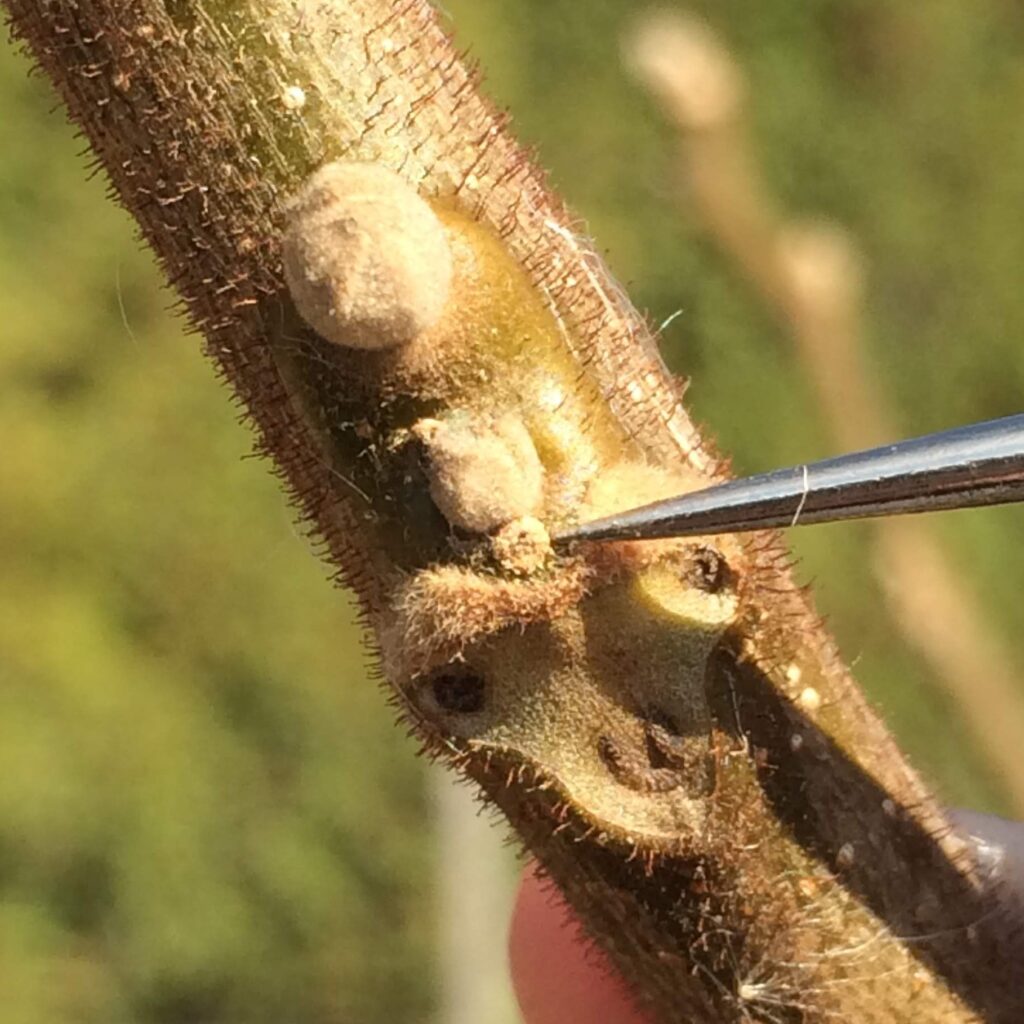
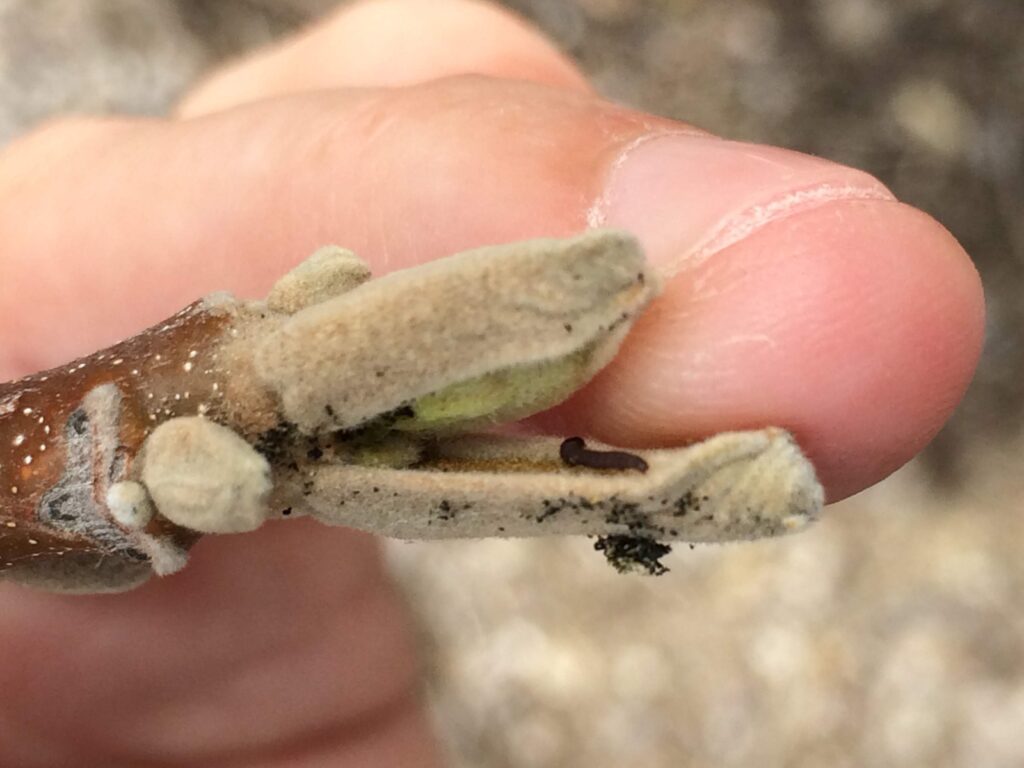
Walnut Shoot Moth Hibernacula Walnut Shoot Moth Caterpillar in Terminal Bud
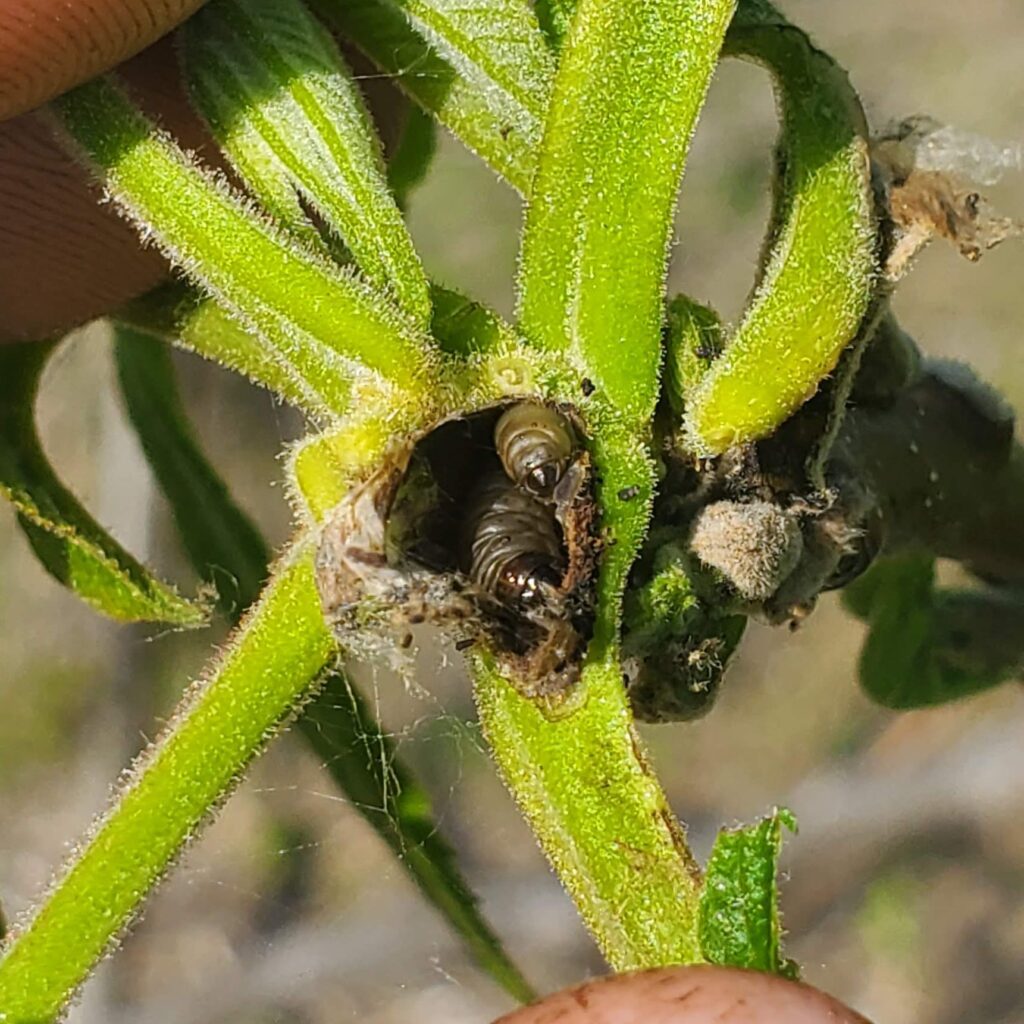
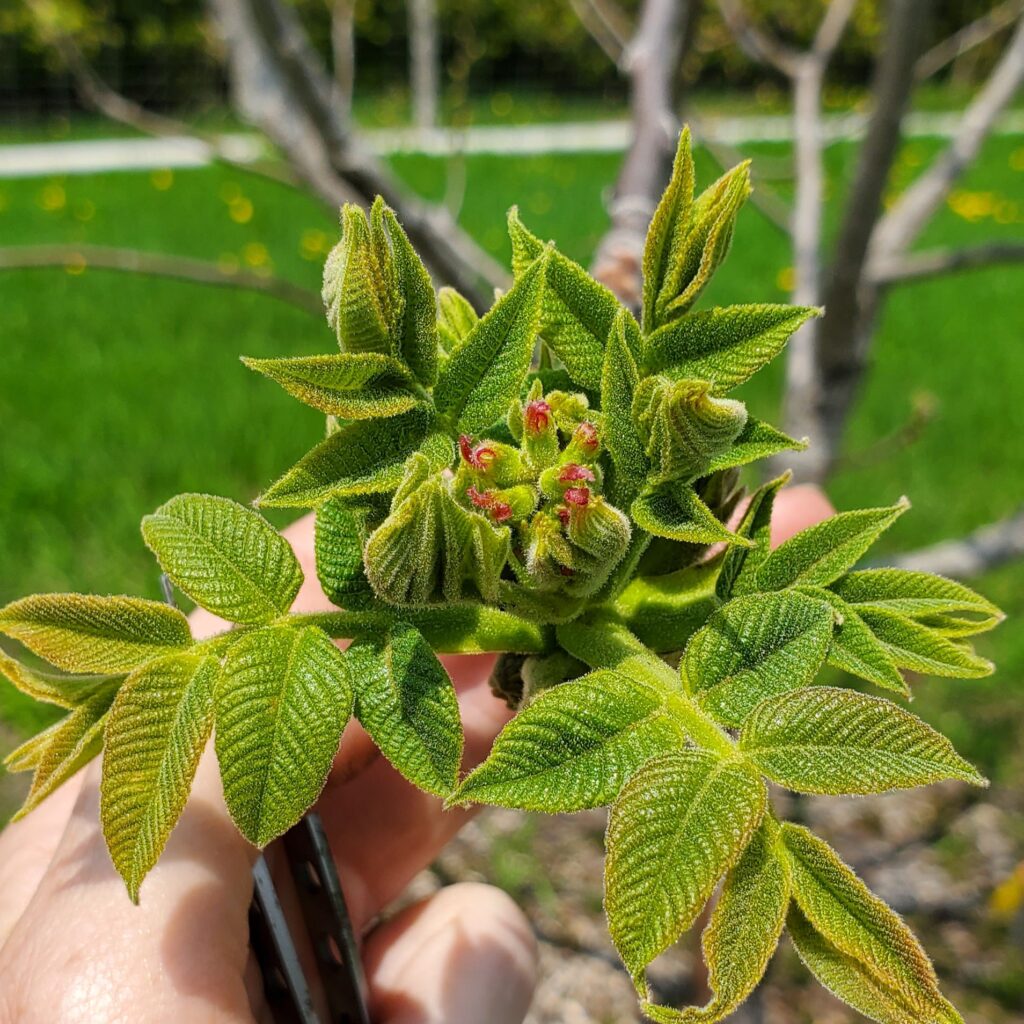
Walnut Shoot Moth in Butternut Pith Butternut Flowers
Summer: June to August
Summer is a time of growth, monitoring, and maintenance.
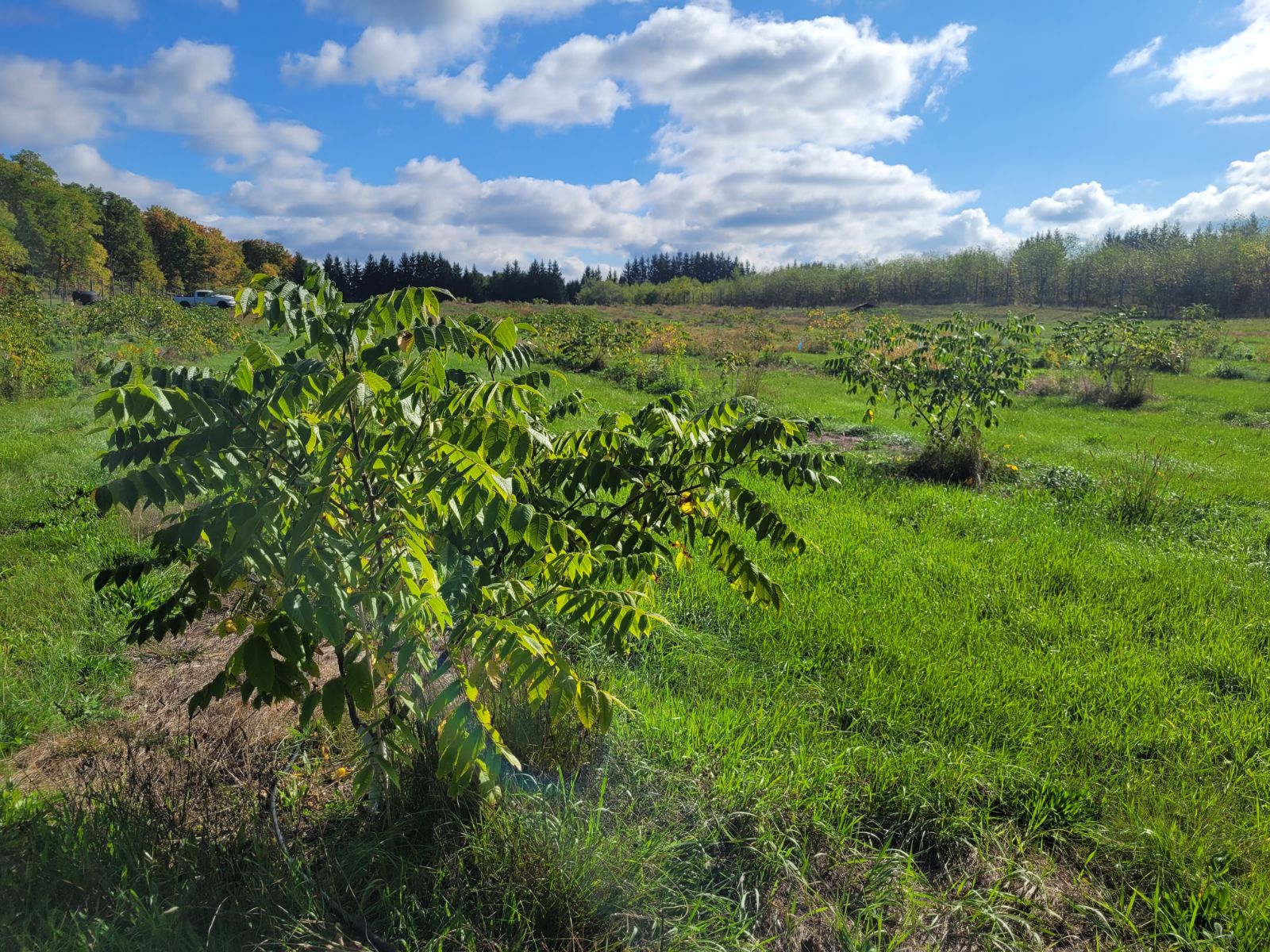
- Planting and Establishment: Once frost risk has passed, two-year-old grafts are planted, mulched, and watered at each orchard.
- Survival Assessment: Staff assess winter losses, remove dead grafts, and update the orchard database.
- Insect Monitoring: Rose Chafers are frequent summer visitors in the Eastern Orchards, feeding on Butternut leaves and sometimes defoliating smaller trees. We manage them mainly through hand-picking to reduce stress on the grafts.
- Orchard Maintenance: Regular watering, mowing, hand-weeding, and trimming keep competition low and conditions ideal for growth.
Seed Crop Forecasting: In August, staff conduct cut tests to gauge seed maturity and forecast the upcoming crop, helping us plan for collection season.
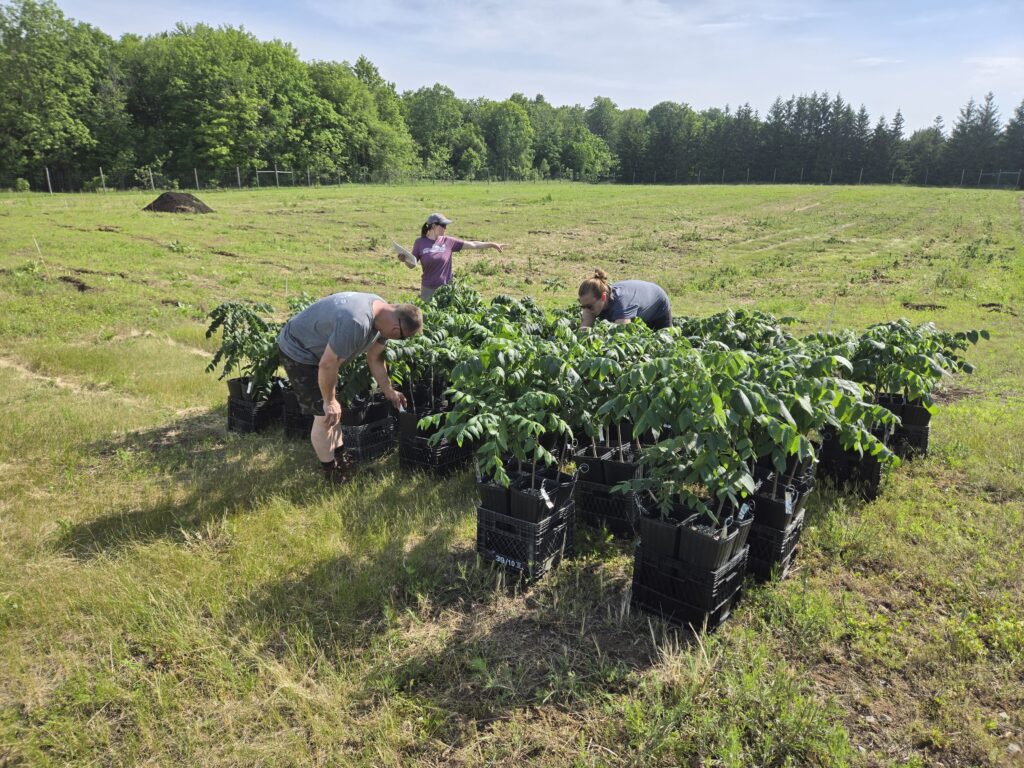
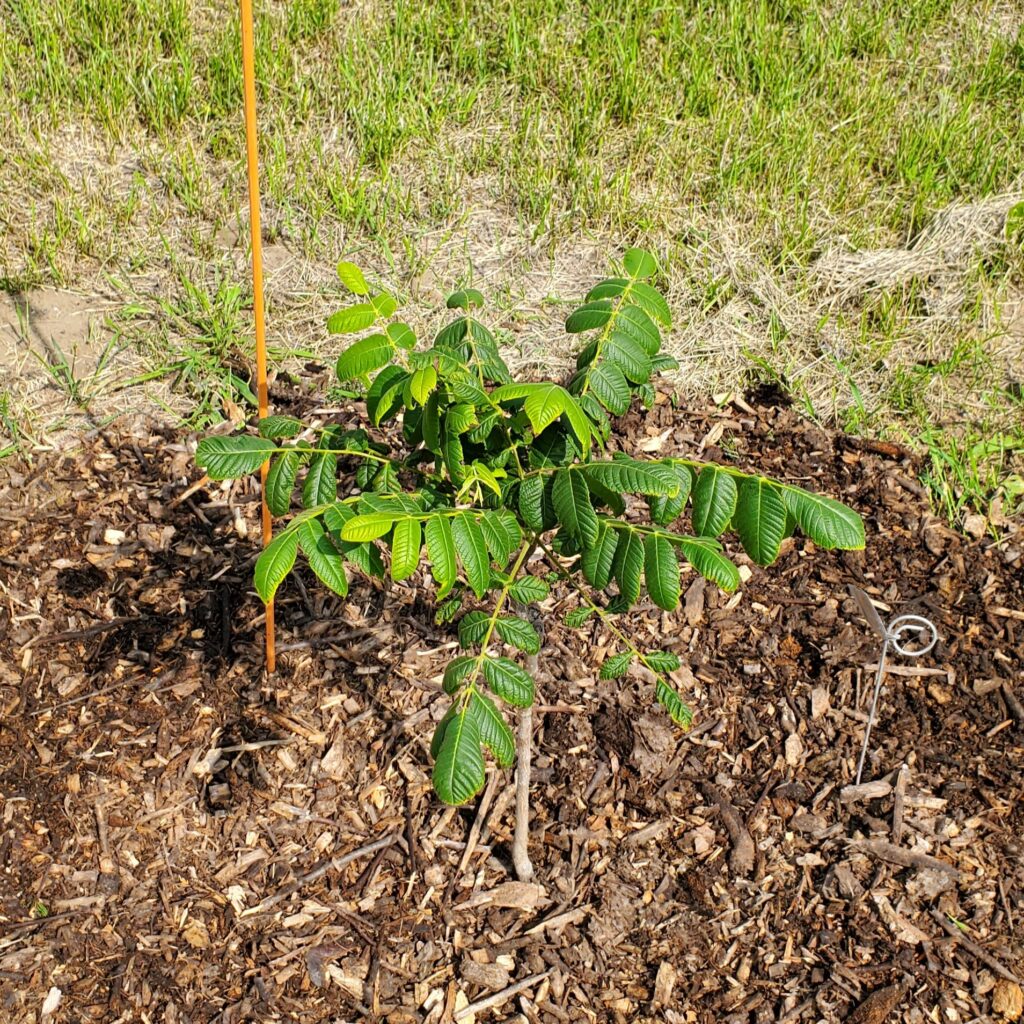
Planting Butternut Grafts Newly Planted Butternut Graft
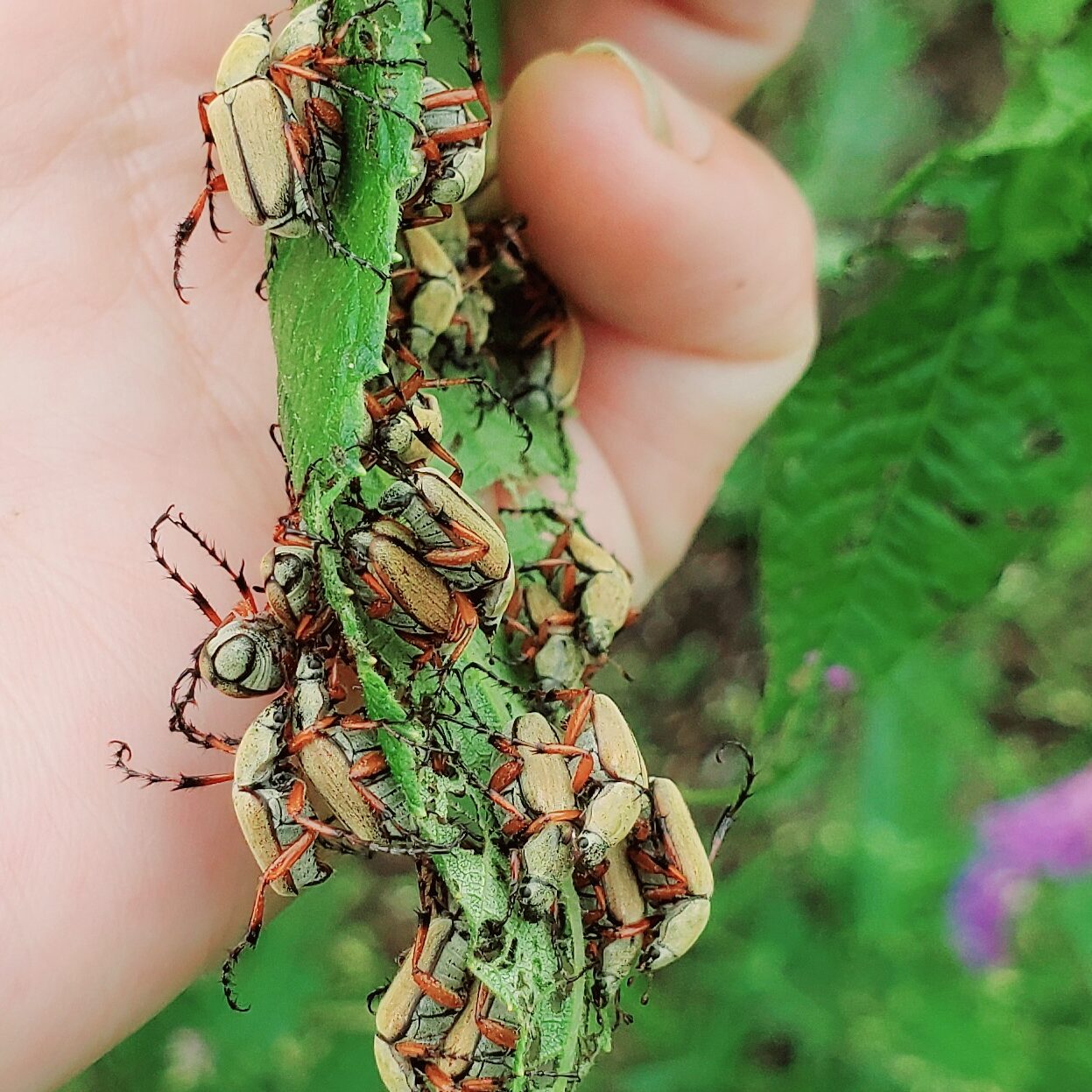
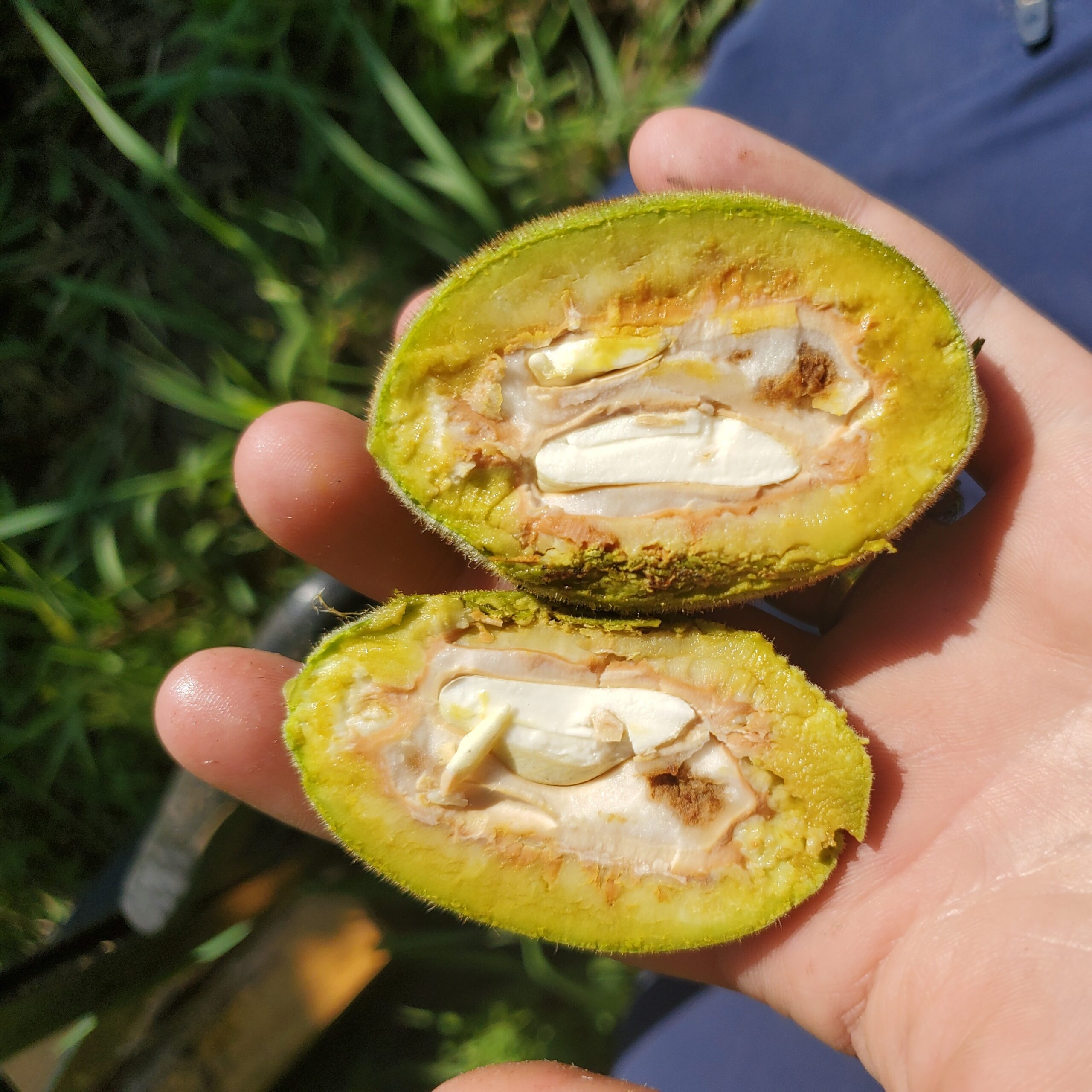
Rose Chafers Butternut Seed Forecasting Cut Test
Fall: September to November
Autumn is all about harvest and preparation.
- Seed Collection: Collection usually begins in late August or early September—timed carefully to capture fully mature seed before squirrels do.
- Fall Survival Assessment: Staff document any losses from the growing season and update the orchard database.
- Tree Guard Application: Tree guards are applied to protect trunks from rodents and winter sunscald.
- Irrigation Shutdown: Systems are drained, dismantled, and stored for winter.
- Preparing for Next Year: New planting spots are staked and treated with herbicide to reduce competition for spring.
Insect Monitoring (Post-Leaf Drop): Once leaves have fallen, we inspect for overwintering Walnut Shoot Moth larvae to reduce next year’s infestations.
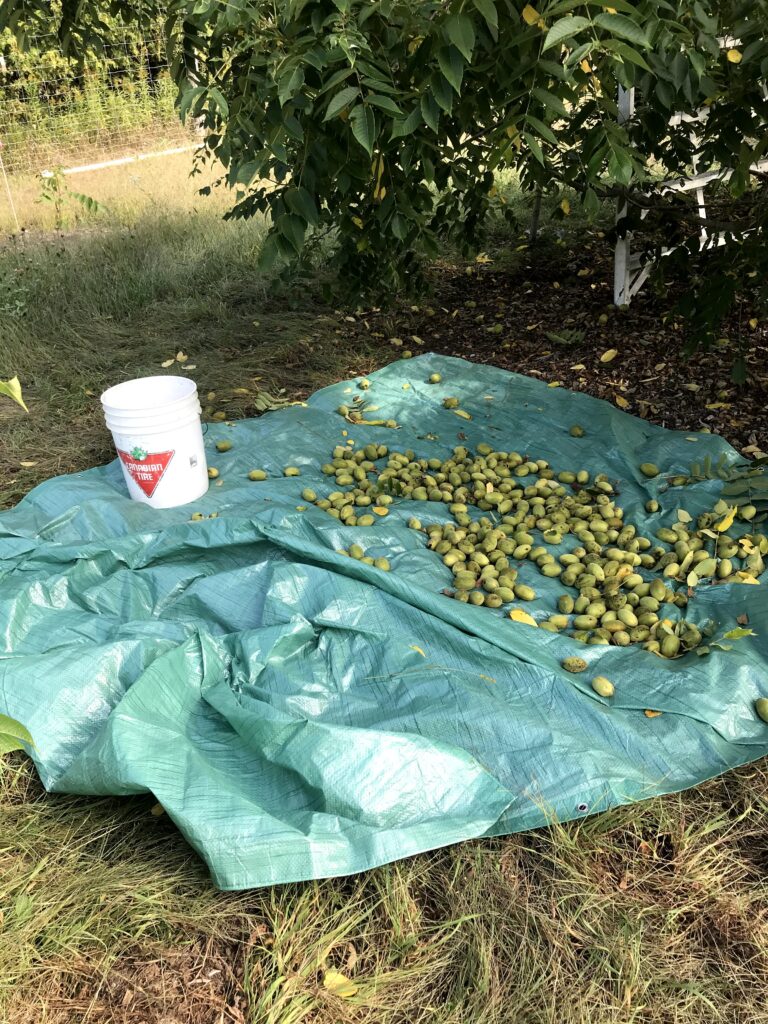
Butternut Seed Collection
Winter: December to March
Winter is quieter, but still crucial.
- Pruning: Winter pruning focuses on removing dead, damaged, or crossing branches to promote strong structure and long-term tree health. This is one of the most time-intensive and costly activities in orchard management. During their first five years, grafts require minimal pruning—but as the trees grow larger, the effort and resources needed increase significantly.
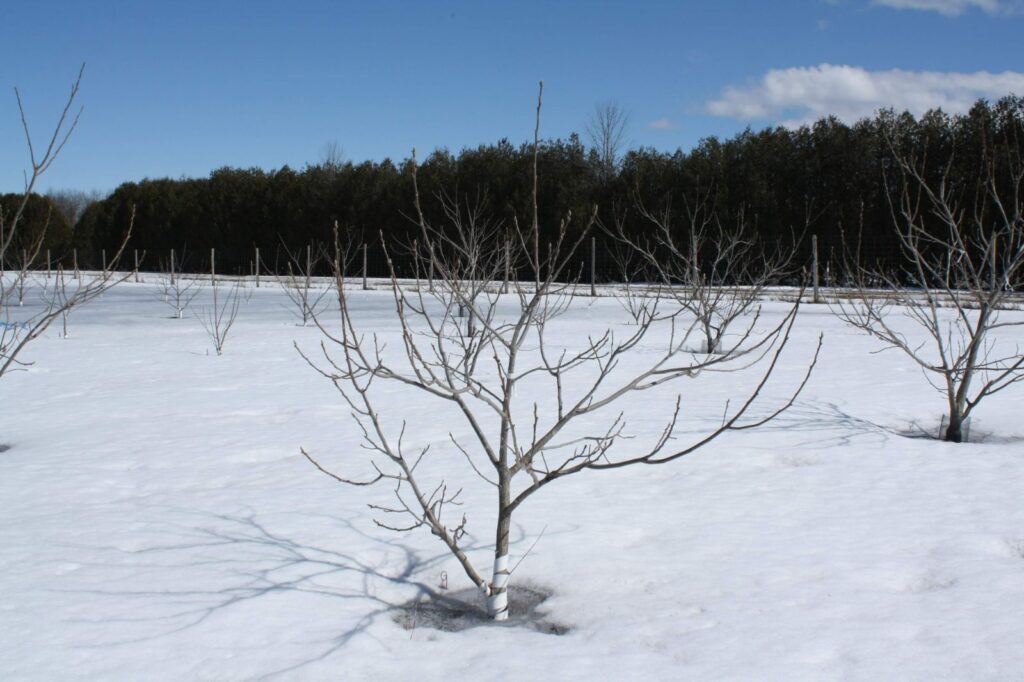
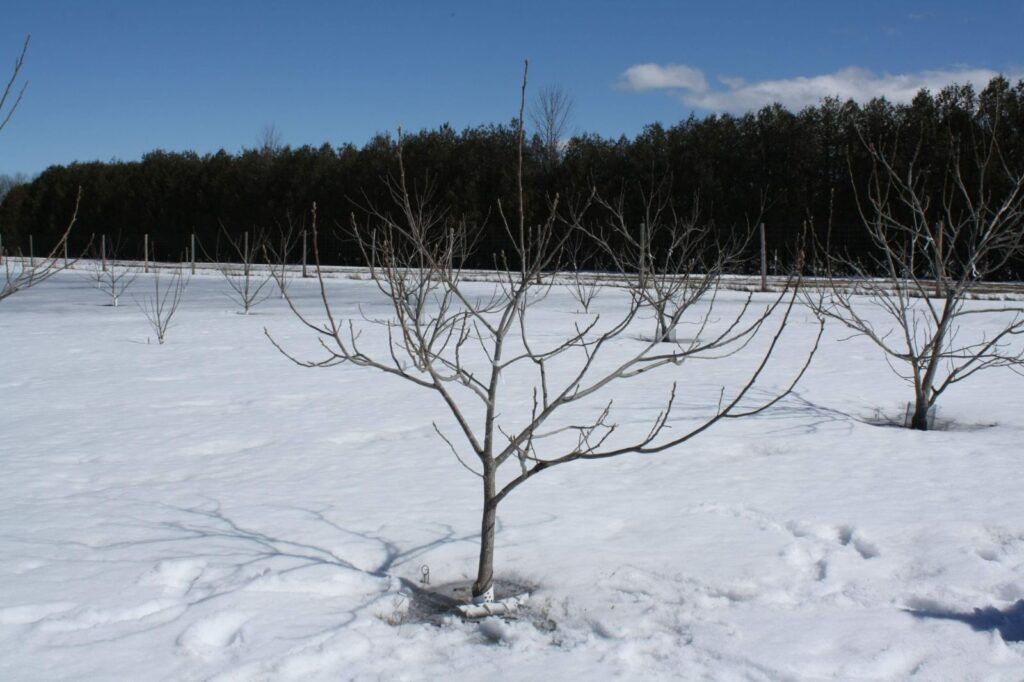
Before After
A Collaborative Effort
Maintaining these Butternut Seed Orchards is a year-round commitment requiring expertise, time, sustainable and predictable funding and dedication – with countless additional tasks taking place between the ones highlighted here. This work would not be possible without the ongoing support of our valued partners—Ferguson Tree Nursery, Somerville Nursery, the Upper Thames River Conservation Authority, and the Ausable Bayfield Conservation Authority—and the continued efforts of our dedicated FGCA staff. Together, we’re working to ensure the future of Butternut in Ontario’s forests.
Leave a Reply
You must be logged in to post a comment.